
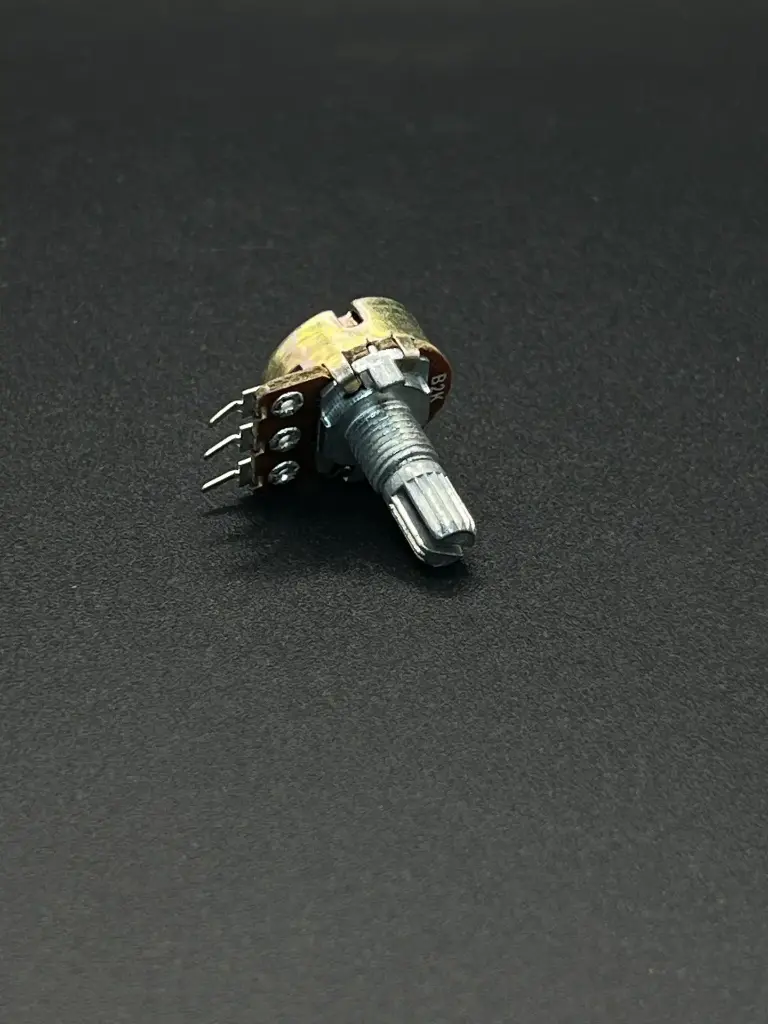
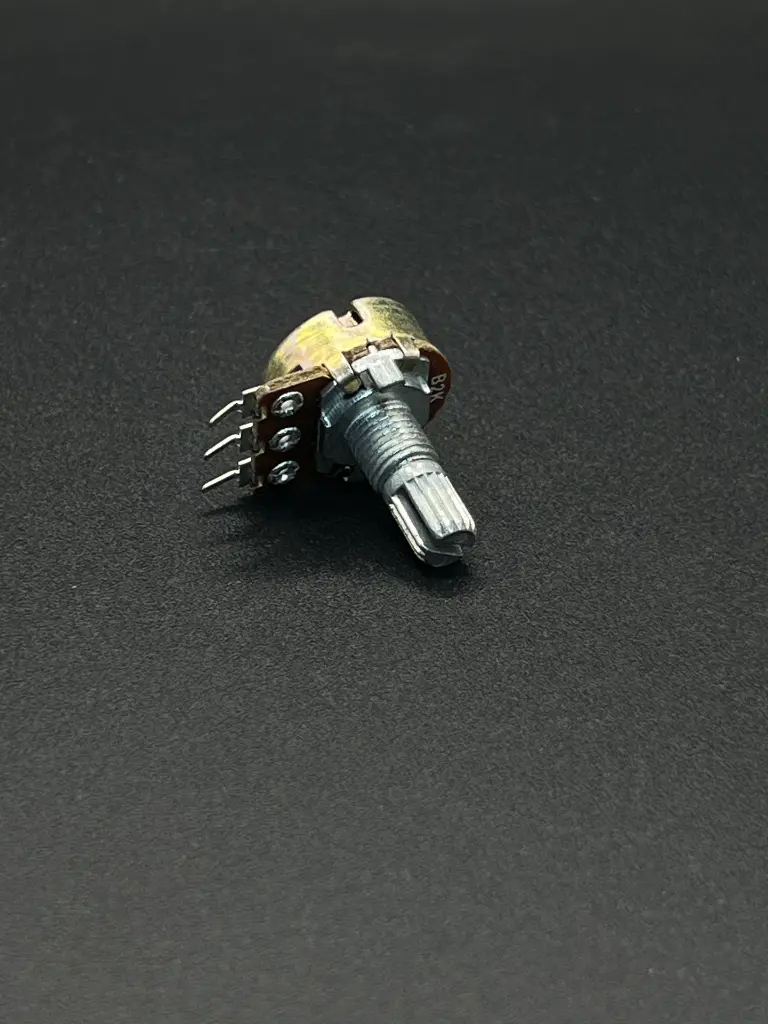
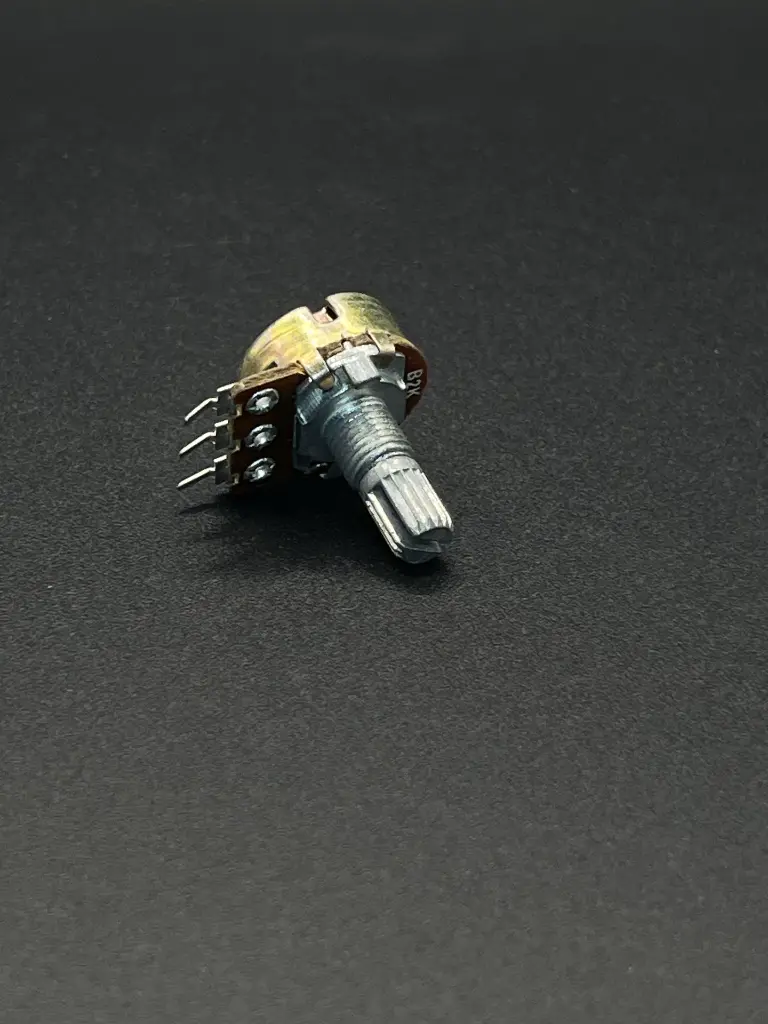

2KΩ Potentiometer
11 sold in last 24 hours
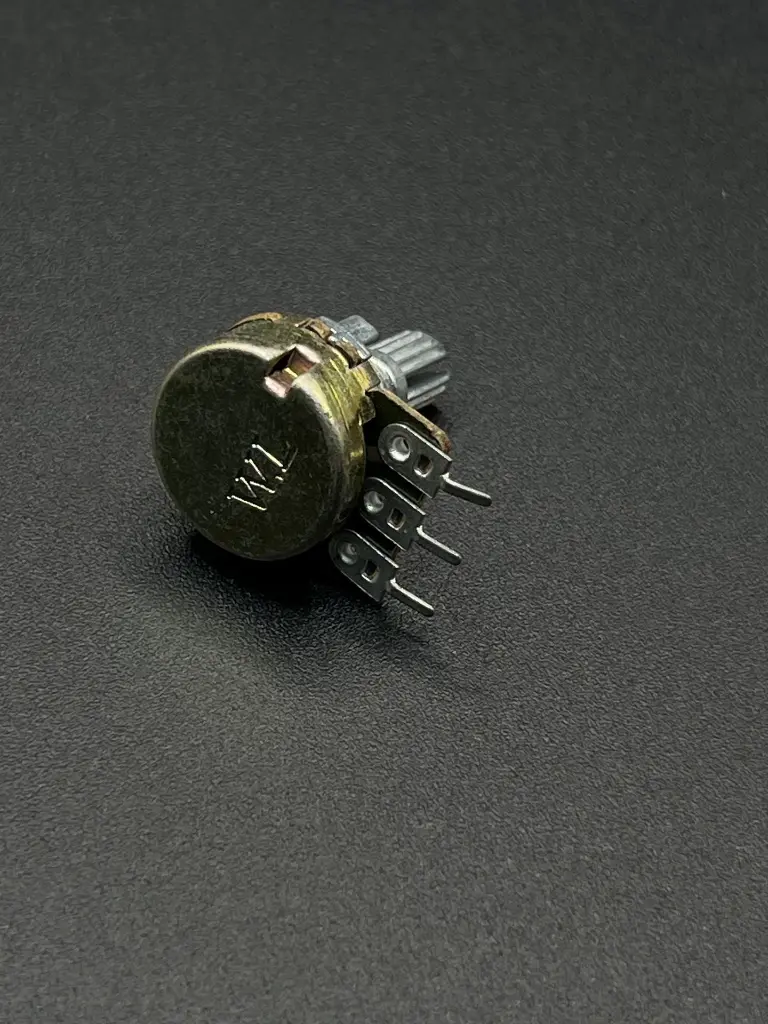
The 2KΩ Potentiometer is a variable resistor used to adjust electrical resistance in various electronic circuits. It provides a resistance of 2 kilohms, allowing for fine control of signal levels, voltage, or current. This component is essential in applications requiring adjustable parameters such as volume controls, tuning circuits, and voltage dividers.
Key Features:
- Resistance: 2KΩ (2,000Ω)
- Adjustable resistance with a rotating or sliding mechanism
- Offers precise control for accurate adjustments
- Available in rotary or linear forms
- Resistance Value: 2KΩ (2,000Ω)
- Tolerance: ±10%Â
- Power Rating: Typically 0.5W to 1W)
- Adjustment Type: Rotary or linear
- Package Type: Through-hole
- Audio equipment volume control
- Calibration and tuning of electronic devices
- Adjustable gain and offset in analog circuits
- Voltage dividers and signal attenuation
- Fine adjustment in measurement systems
- Install the potentiometer into the circuit as specified.
- Rotate or slide the control to adjust the resistance to the desired value.
- Verify that the adjustment meets the circuit’s operational requirements.
- Do not exceed the power rating to avoid overheating and damage.
- Handle with care to prevent mechanical damage.
- Regularly inspect for wear if frequently used.
No Specifications