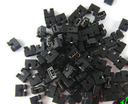

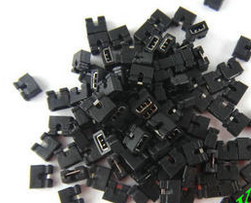
The 2.54mm Jumper Connector Cap is a small, plastic cap designed to connect two adjacent pins on a 2.54mm pitch (0.1 inch) header. This connector cap is commonly used in electronics for configuring hardware settings, selecting modes, and setting addresses on PCBs (Printed Circuit Boards). It provides a reliable and reusable method to make temporary or semi-permanent connections between pins.
Key Features:
- Standard Pitch: Designed for 2.54mm (0.1 inch) pitch headers, widely used in electronic devices.
- Easy to Use: Simple push-on and pull-off design for quick and easy installation.
- Reusable: Can be reused multiple times without losing connectivity or fit.
- Durable Construction: Made from high-quality plastic to ensure long-lasting performance.
- Compact Size: Small form factor suitable for use in tight spaces and compact electronic assemblies.
- Color-Coded Options: Available in various colors for easy identification and organization.
- Pitch: 2.54mm (0.1 inch)
- Material: High-quality plastic
- Dimensions: Approximately 5.8mm x 2.54mm x 5.0mm (L x W x H)
- Operating Temperature Range: -40°C to +85°C
- Contact Resistance: ≤20mΩ
- Insulation Resistance: ≥100MΩ
- Durability: Up to 100 mating cycles
- Configuring Settings: Commonly used for setting configurations on motherboards, development boards, and other electronic devices.
- Mode Selection: Used to select operating modes, boot options, and other functions on PCBs.
- Address Setting: Ideal for setting addresses on devices like memory modules and communication interfaces.
- DIY Projects: Perfect for hobbyist projects and custom electronics that require temporary connections.
- Prototyping: Useful in prototype development for quick and easy modifications to circuit configurations.
No Specifications