
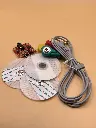
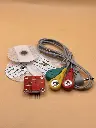
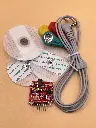
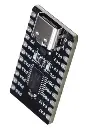
Description
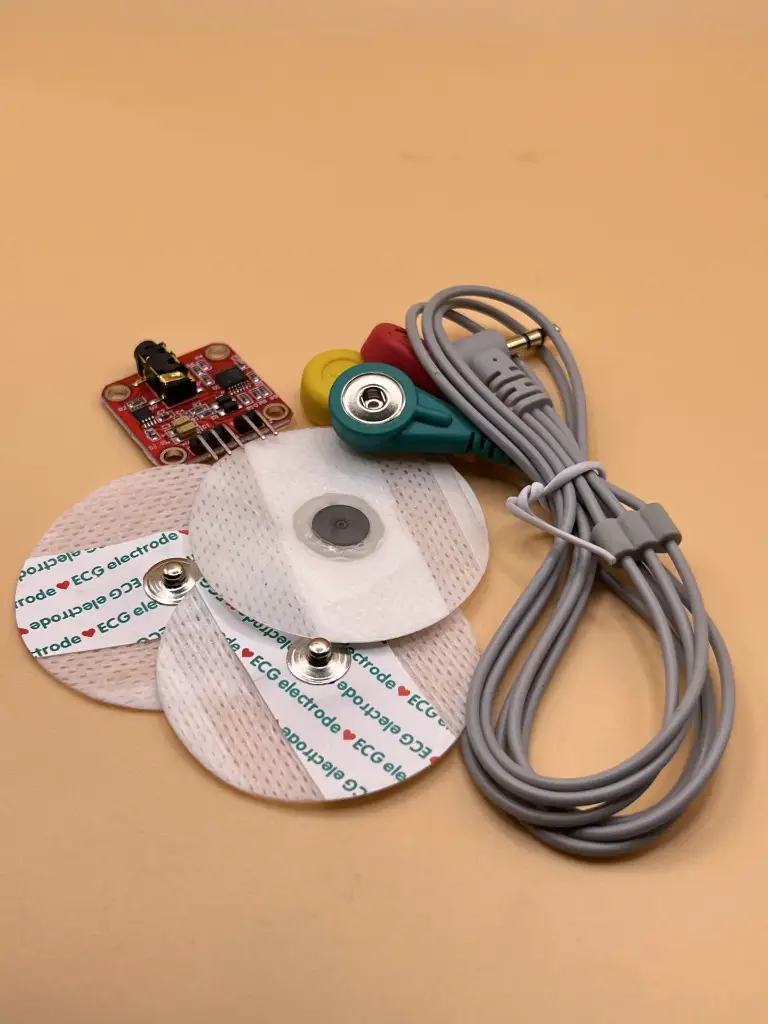
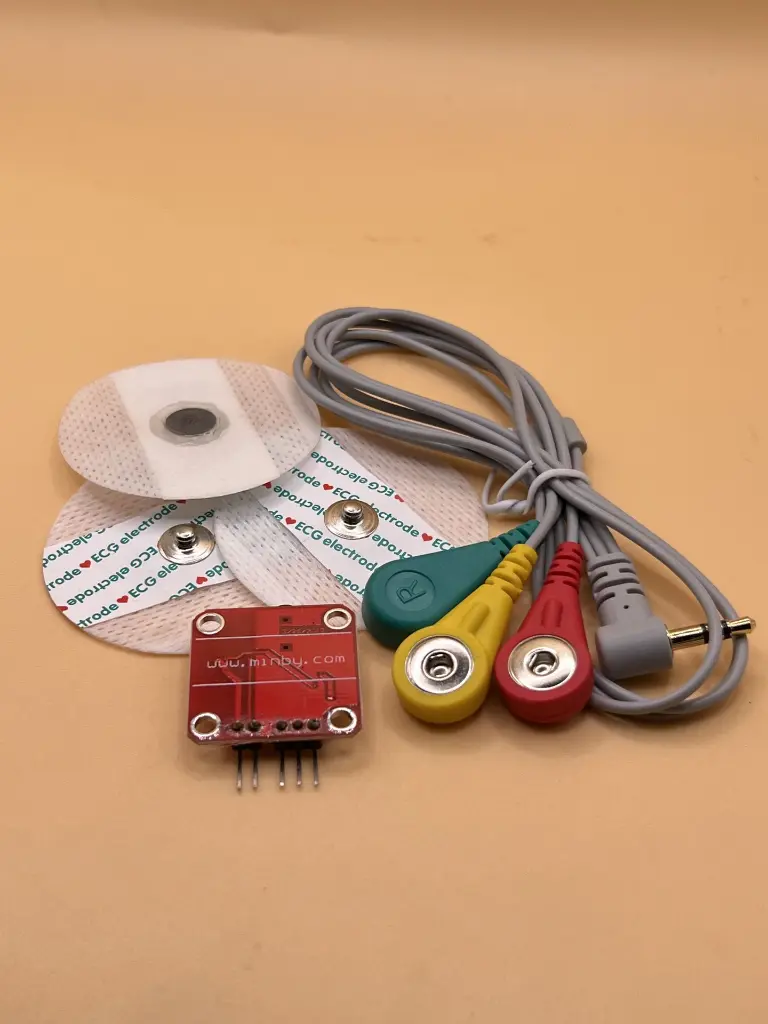
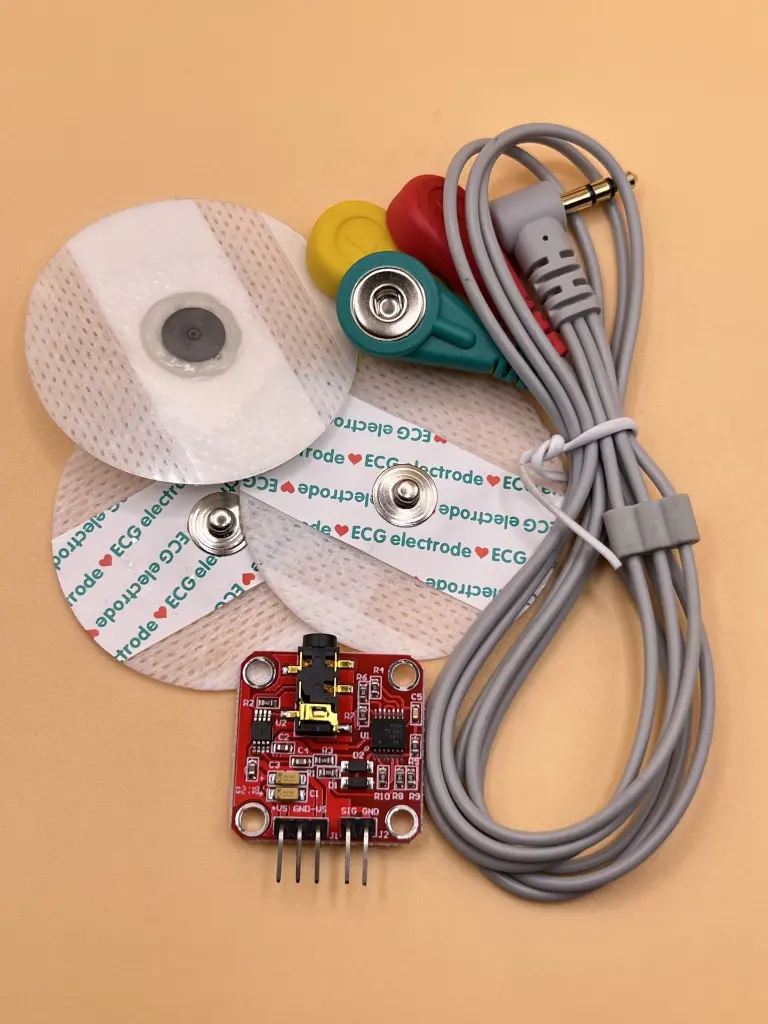
The Bioelectric EMG Muscle Electrical Signal Sensor is a non-invasive device designed to detect, amplify, and process the complex electrical activity produced by skeletal muscles during contraction . Unlike raw EMG outputs, this sensor features onboard signal conditioning, providing a user-friendly, rectified, and smoothed analog output that is ideally suited for microcontroller-based applications . It is widely used in prosthetics, robotics control, video games, exoskeleton suits, and biomedical research.
Key Features
- Onboard Signal Processing: Outputs an amplified, full-wave rectified, and smoothed signal — no complex filtering or RMS calculation code is required on your microcontroller
- High Sensitivity & Adjustable Gain: Features an on‑board potentiometer to adjust gain from 0.002× up to 20,700×, allowing fine‑tuning for different muscle groups and contraction strengths
- Non-Invasive Design: Uses standard 3-lead surface electrodes (Red, Blue, Black snaps) for easy and painless application
- Compact Form Factor: Small 1″ × 1″ (25.4mm × 25.4mm) board with standard 0.1″ pin headers, fitting easily on standard breadboards
- Real-Time Output: Provides immediate analog voltage changes proportional to muscle activity, suitable for both static (isometric) and dynamic (movement) monitoring
Specifications
| Parameter | Specification |
|---|---|
| Sensor Type | Electromyography (EMG) – Differential Amplifier |
| Power Supply (CRITICAL) | Dual‑Rail Bipolar Supply (e.g., ±3.5V to ±18V DC). Requires both +Vs and -Vs. Standard setup uses two 9V batteries. Does NOT run on single 3.3V/5V USB power. |
| Typical Supply Voltage | Recommended: ±5V to ±9V DC |
| Output Signal Type | Amplified, Rectified, and Smoothed Analog Voltage |
| Output Voltage Range | 0V to +Vs (e.g., 0V to 9V if using 9V batteries) |
| Microcontroller Compatibility | Requires a voltage divider on the SIG pin (if Vs > 5V) to safely interface with 5V/3.3V logic; or use lower ±5V supply |
| Frequency Response | ~10Hz to 500Hz |
| Gain Adjustment | On-board trimmer potentiometer (Formula: Gain = 207 × (R / 1kΩ)) |
| Electrode Type | 3× Surface Electrodes (Ag/AgCl recommended); Red (Muscle Belly), Blue (Tendon), Black (Reference/Bony area) |
| Dimensions | 1.0 × 1.0 inches (25.4 × 25.4 mm) |
Applications
- Robotics & Prosthetics: Control robotic hands, grippers, and exoskeleton suits via muscle flex intensity
- Human-Computer Interaction (HCI): Use muscle signals as an input method for video games and virtual reality
- Medical & Rehabilitation: Monitor muscle re‑education and track recovery progress in physical therapy
- Neuromuscular Research: Study muscle fatigue, motor unit recruitment, and co‑contraction patterns
- Biofeedback Systems: Train users to consciously relax or contract specific muscle groups
Datasheet: For detailed technical information, please refer to the datasheet.