
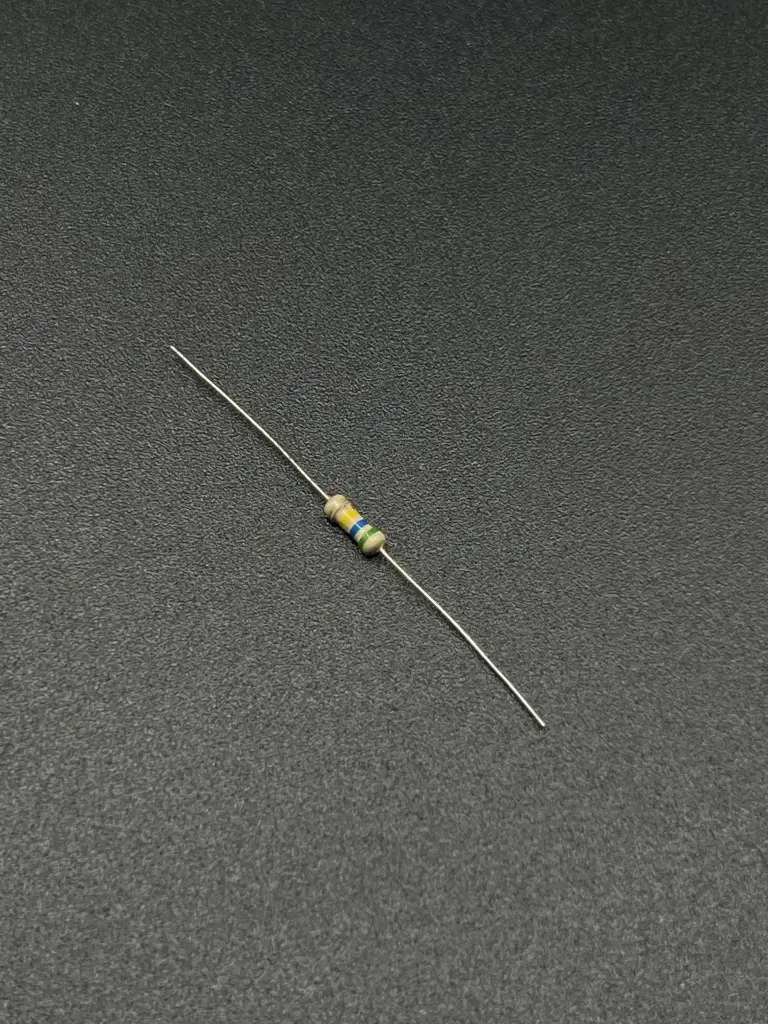
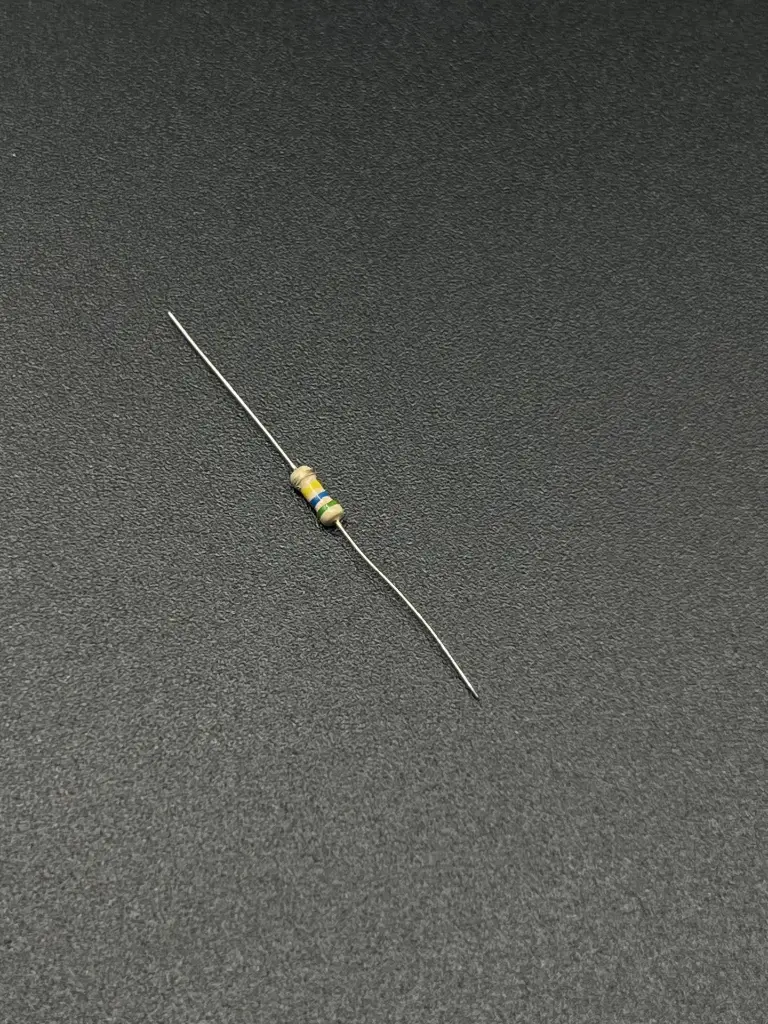
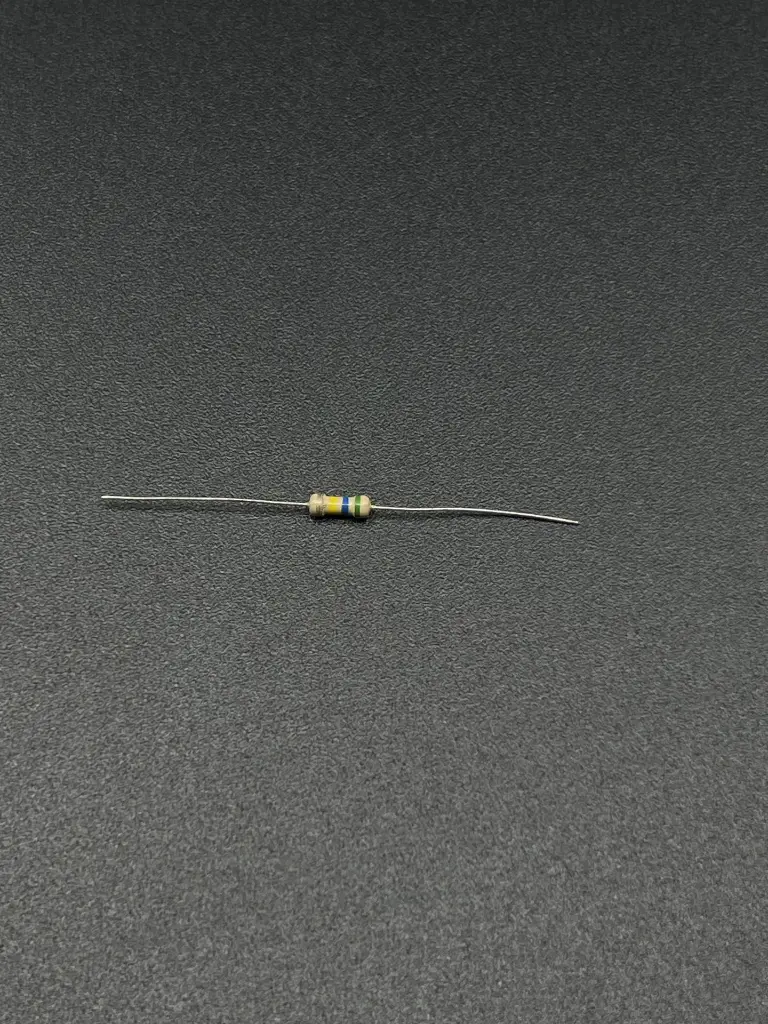
560KΩ 1/4W resistor
The 560KΩ 1/4W resistor is a fixed resistor used in electronic circuits to limit current, divide voltages, or set impedance levels. With a resistance of 560,000 ohms and a power rating of 0.25 watts, it is commonly employed in low-power applications where precise resistance is required.
Key Features:
- Resistance value: 560KΩ (560,000 ohms)
- Power rating: 1/4 watt (0.25W)
- Tolerance: ±5% (standard) or ±1% (precision)
- Type: Fixed resistor
- Lead type: Axial leads for through-hole mounting
- Resistance: 560KΩ
- Power Rating: 0.25W
- Tolerance: ±5% (standard), ±1% (precision)
- Operating Temperature Range: -55°C to +155°C
- Temperature Coefficient: ±200 ppm/°C (typical)
- Package Type: Axial through-hole
- Voltage dividers
- Signal conditioning
- Biasing circuits
- Pull-up/pull-down resistors
- Filtering applications
- Determine the placement of the resistor in your circuit based on the required resistance and power rating.
- Insert and solder the resistor into the designated positions on the circuit board.
- Verify connections to avoid short circuits or incorrect wiring.
- Test the circuit to ensure it operates as expected.
- Avoid exceeding the resistor’s power rating to prevent overheating and potential damage.
- Handle with care to prevent mechanical damage to the resistor or its leads.
- Ensure proper orientation and placement in the circuit for accurate functionality.
No Specifications