

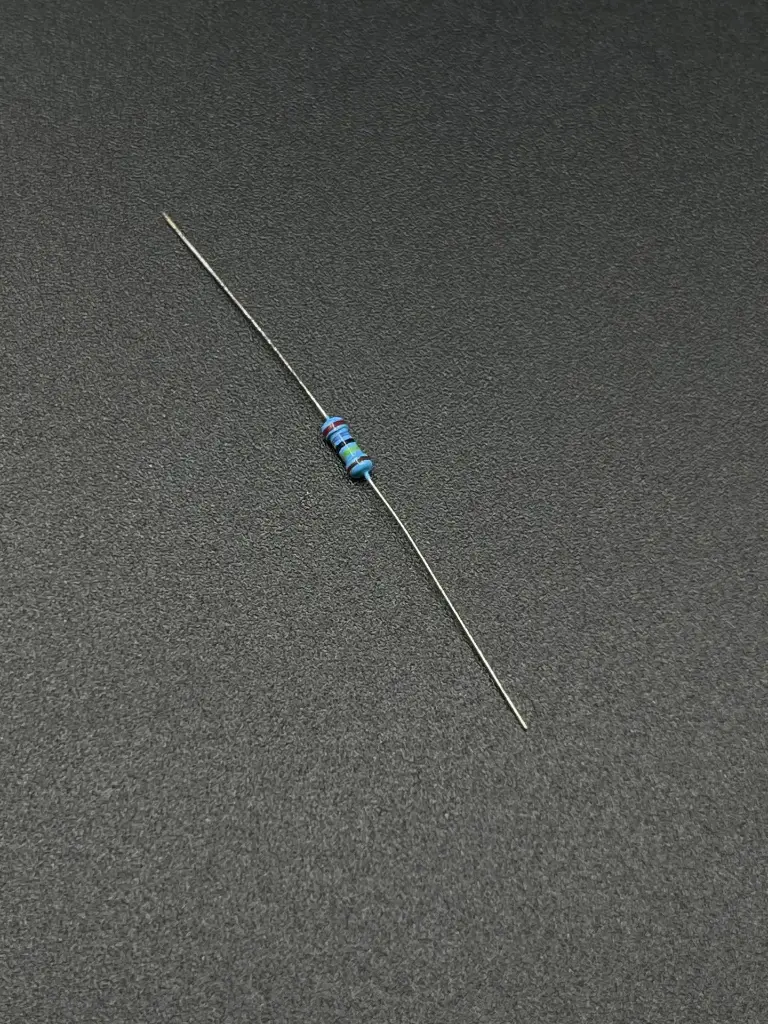
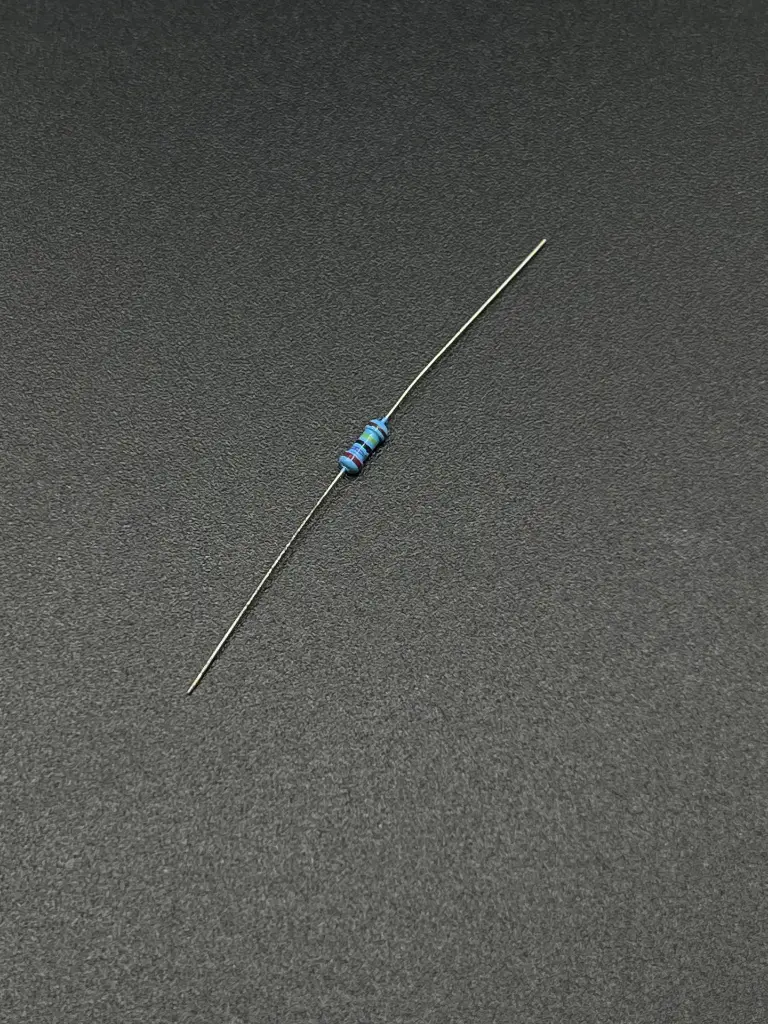
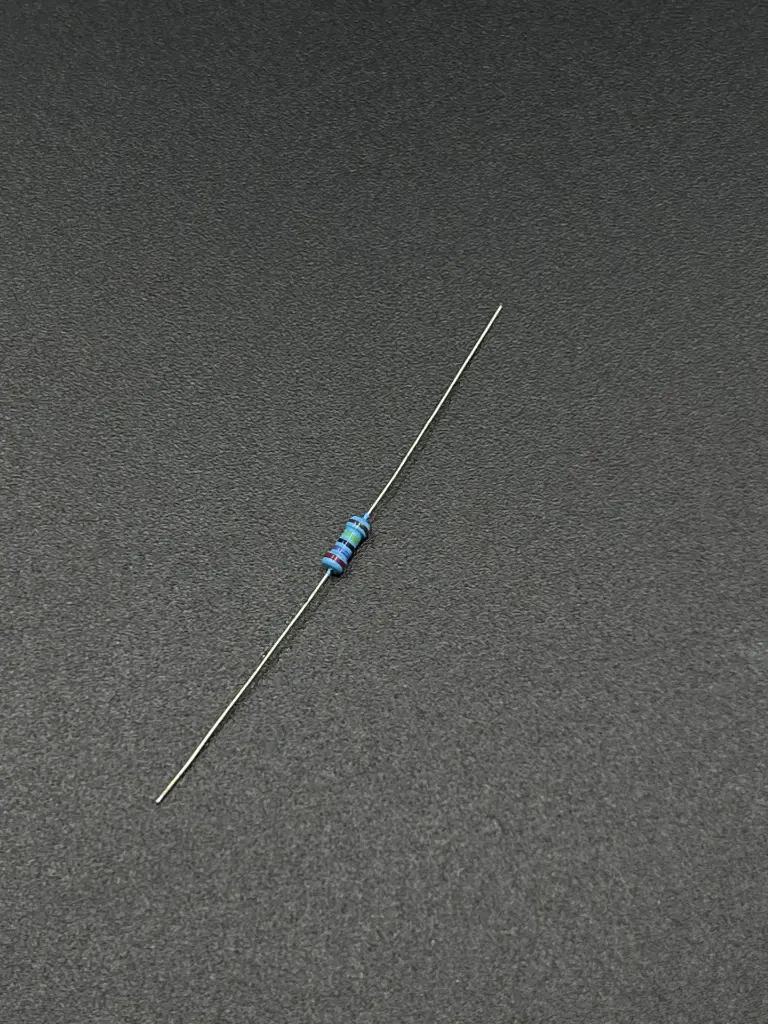
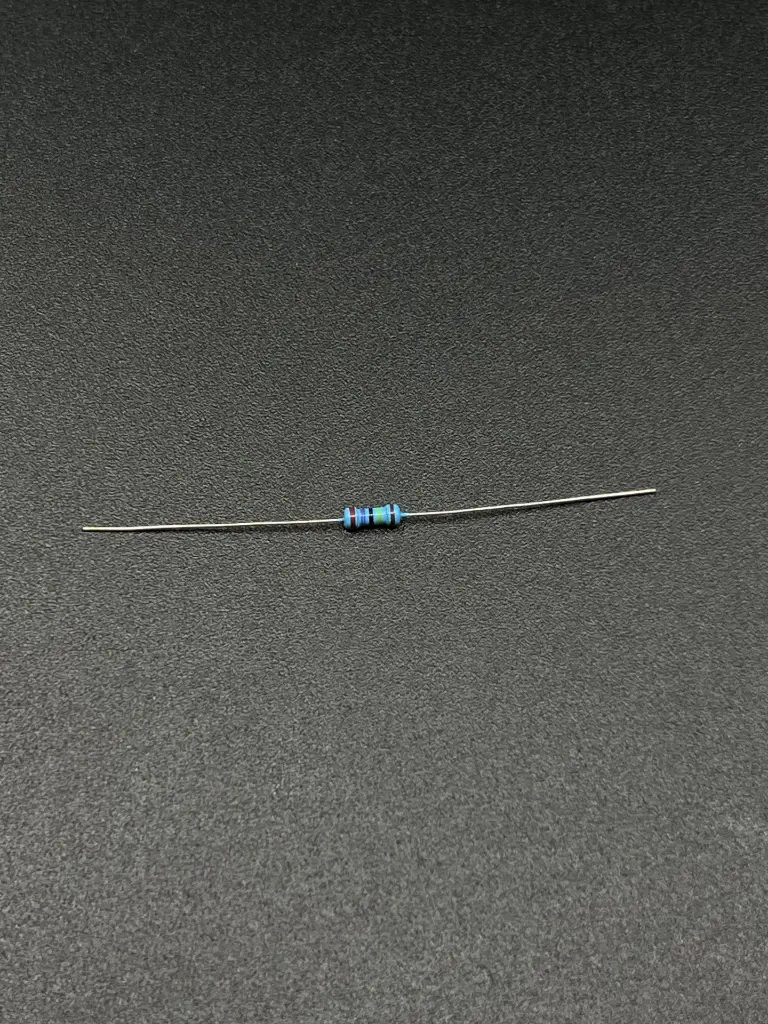


2.7MΩ 1/4W resistor
The 2.7MΩ 1/4W Resistor is a fixed resistor designed for a variety of electronic applications where high resistance and low power dissipation are required. It features a 2.7 megaohm resistance value and can handle a maximum power of 0.25 watts. This resistor is commonly used in circuits to limit current, divide voltages, and provide biasing for transistors and other components.
Key Features:
- Resistance value of 2.7MΩ
- Power rating of 1/4 watt (0.25W)
- Tolerance of ±5%
- Axial leaded design for easy through-hole mounting
- Made of high-quality carbon film or metal film for stability and reliability
- Color-coded bands for easy identification
- Resistance: 2.7MΩ (2,700,000 ohms)
- Power Rating: 1/4W (0.25W)
- Tolerance: ±5%
- Temperature Coefficient: ±200ppm/°C
- Operating Temperature Range: -55°C to +155°C
- Body Length: 6.3mm
- Body Diameter: 2.3mm
- Lead Diameter: 0.5mm
- Lead Length: 25mm (each side)
- Material: Carbon film or metal film
- Voltage dividers
- Current limiting circuits
- Biasing resistors for transistors
- Signal conditioning circuits
- Filter networks
- Feedback circuits in amplifiers
- Determine the required resistance value for your circuit.
- Identify the resistor value using the color-coded bands.
- Insert the resistor leads into the appropriate holes on the PCB or breadboard.
- Solder the leads in place if using a PCB, or ensure firm contact in a breadboard.
- Trim excess lead length if necessary.
- Ensure the resistor's power rating is not exceeded to avoid overheating and potential failure.
- Verify the resistor's value and tolerance before use in precision circuits.
- Handle with care to avoid damage to the resistor's body and leads.
No Specifications