
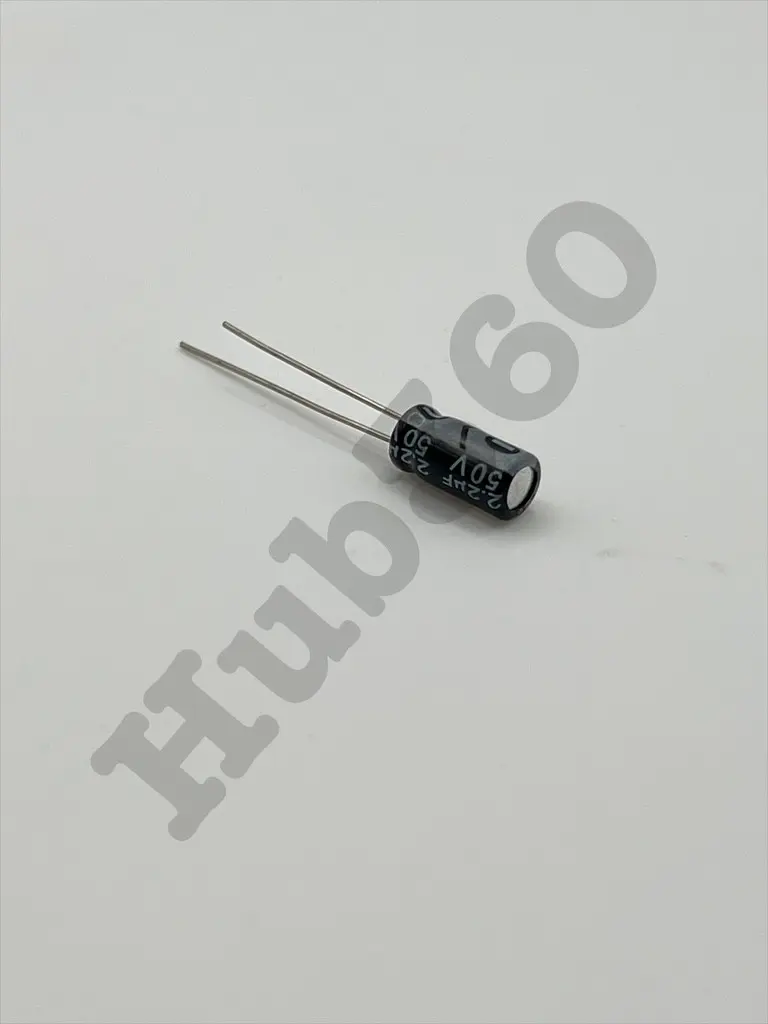
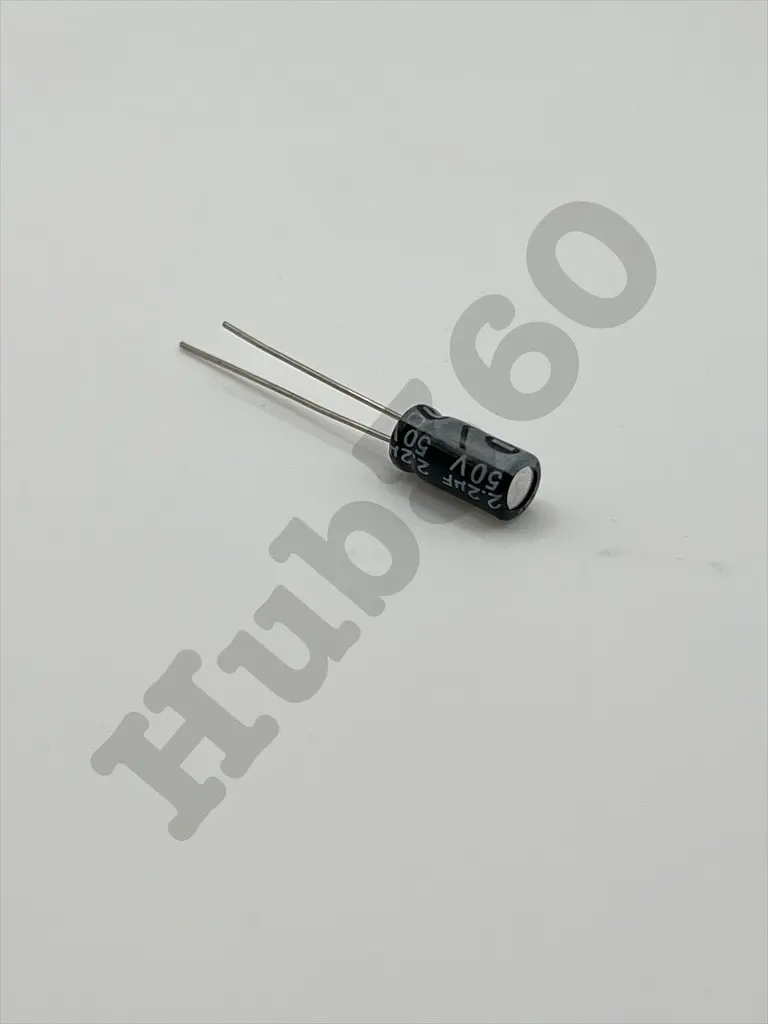
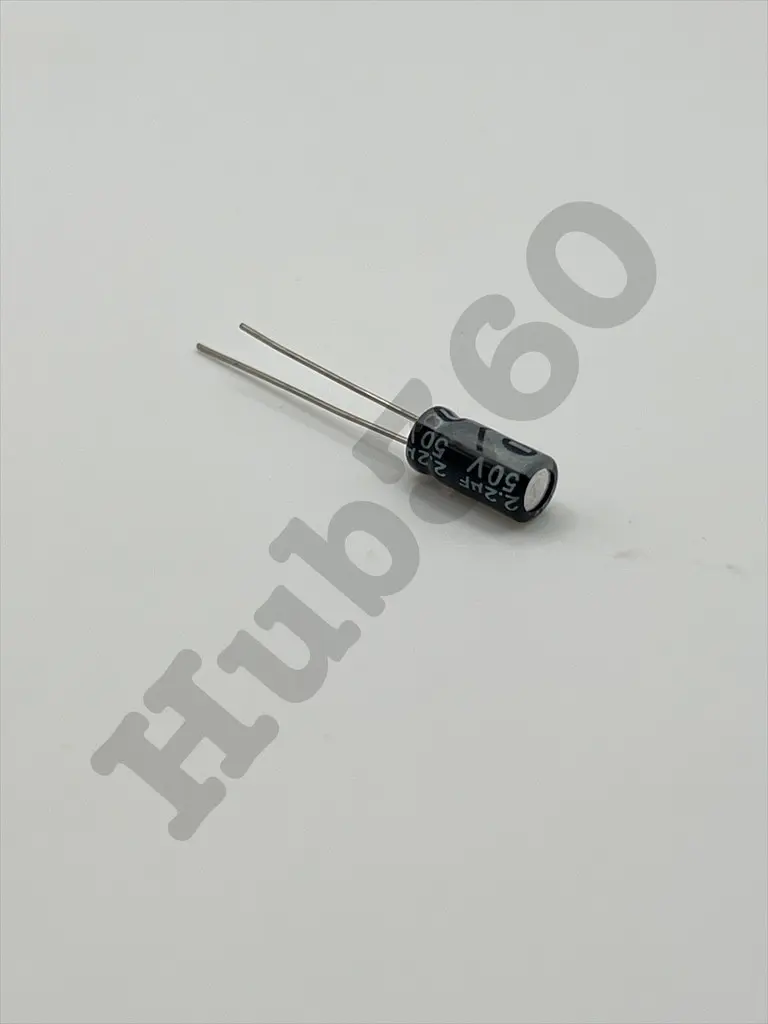
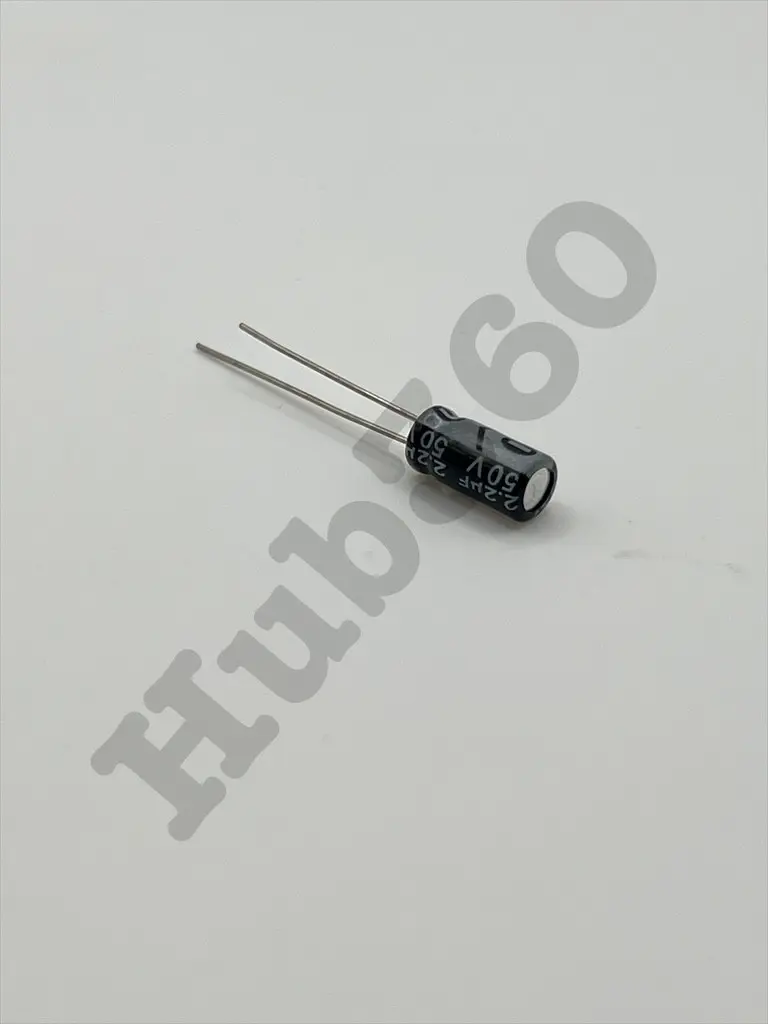
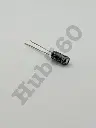
2.2uf 50V electrolytic capacitor
The 2.2µF 50V electrolytic capacitor is a polarized capacitor designed for electronic circuits where stable and reliable capacitance is required. It has a capacitance of 2.2 microfarads and a maximum voltage rating of 50 volts. Electrolytic capacitors are commonly used in filtering, coupling, and decoupling applications due to their high capacitance values and compact size.
Key Features:
- Capacitance: 2.2µF
- Voltage Rating: 50V
- Polarized electrolytic construction
- High capacitance in a compact package
- Reliable performance for various electronic applications
- Suitable for smoothing and filtering in power supplies
- Capacitance: 2.2µF (microfarads)
- Voltage Rating: 50V DC
- Tolerance: Typically ±20%Â
- Temperature Range: -40°C to +85°CÂ
- Package Type: RadialÂ
- Power supply filtering
- Signal coupling and decoupling
- Audio and RF applications
- Smoothing out voltage fluctuations
- Electronic circuit boards
- Identify the positive (anode) and negative (cathode) leads of the capacitor.
- Insert the capacitor into the circuit board or appropriate socket, observing polarity.
- Solder the leads in place, ensuring secure connections.
- Verify proper operation by powering on the circuit.
- Ensure correct polarity when installing to avoid damage.
- Do not exceed the maximum voltage rating.
- Handle with care to avoid mechanical damage.
No Specifications